On this page
Quick answer
The main tattoo styles are fine line, realism, traditional, neo-traditional, Japanese, blackwork, watercolour, geometric, tribal and lettering. Bold styles such as traditional, blackwork and Japanese age best in Malaysia's strong sun. Fine line and watercolour look delicate but can blur or fade sooner, so they need a skilled artist, good placement and steady sun protection.
Choosing between tattoo styles is the first real decision in any tattoo. The style affects how long the session takes, what it costs, which artist you book and how the piece looks in ten years. This guide covers ten styles, plus one fast-rising trend. For each one, we explain what it is, where it came from and how it ages in Malaysian heat and UV. We also point you to artists in Malaysia who do it well.
Fine line
Thin, delicate lines and tiny detail.
Realism
Portraits and lifelike shading.
Traditional
Bold lines, classic flash, few colours.
Neo-traditional
Traditional bones, richer colour and detail.
Japanese
Dragons, koi and waves on a large scale.
Blackwork
Solid black, ornament and dotwork.
Watercolour
Soft washes and splashes of colour.
Geometric
Shapes, symmetry and mandalas.
Tribal and Borneo
Iban motifs and bold black patterns.
Lettering
Names, dates, quotes and script.
Fine line
A fine line tattoo uses very thin needles, often a single needle or a small group, to make crisp, delicate lines. Typical designs include florals, small script, constellations and tiny animals. Many trace the style to single-needle work in Los Angeles, and it then spread fast through Instagram in the 2010s. Today it is the most requested of all tattoo styles for first tattoos in the Klang Valley.
How fine line ages in Malaysian sun
How it ages: all tattoo lines spread slightly over time as ink settles in the skin. With a bold line you barely notice. With a hair-thin line, the same spread can turn sharp detail soft, and tiny lettering can close up. Sun speeds this up, because UV breaks down pigment. In fact, some Malaysian studios refuse very small micro tattoos and white ink altogether. Pink Tattoos in Bangsar, for example, does not take micro or white work because it does not heal well.
Healing and sun: fine line heals quickly, often in about two weeks. After that, use a high-SPF sunscreen whenever the area sees daylight, since a beach weekend in Langkawi does more damage to thin lines than to bold ones. Placement matters too. Inner arms, upper back and ribs fade more slowly than hands, fingers and feet. Our article on how fine line tattoos age goes deeper.
Price and where to find it: fine line pieces are usually small, so many cost close to the shop minimum, which runs about RM120–RM250 across Malaysia. We found no fixed fine line premium. Even so, detail and the artist's seniority push prices up, so see our small tattoo price guide and confirm before booking. In Petaling Jaya, Sugee Wee and Tsuki have the strongest press records, and Blanc Art Studio in Bangsar has a deep fine line portfolio. More names sit on our best tattoo artists in Malaysia list.
Realism
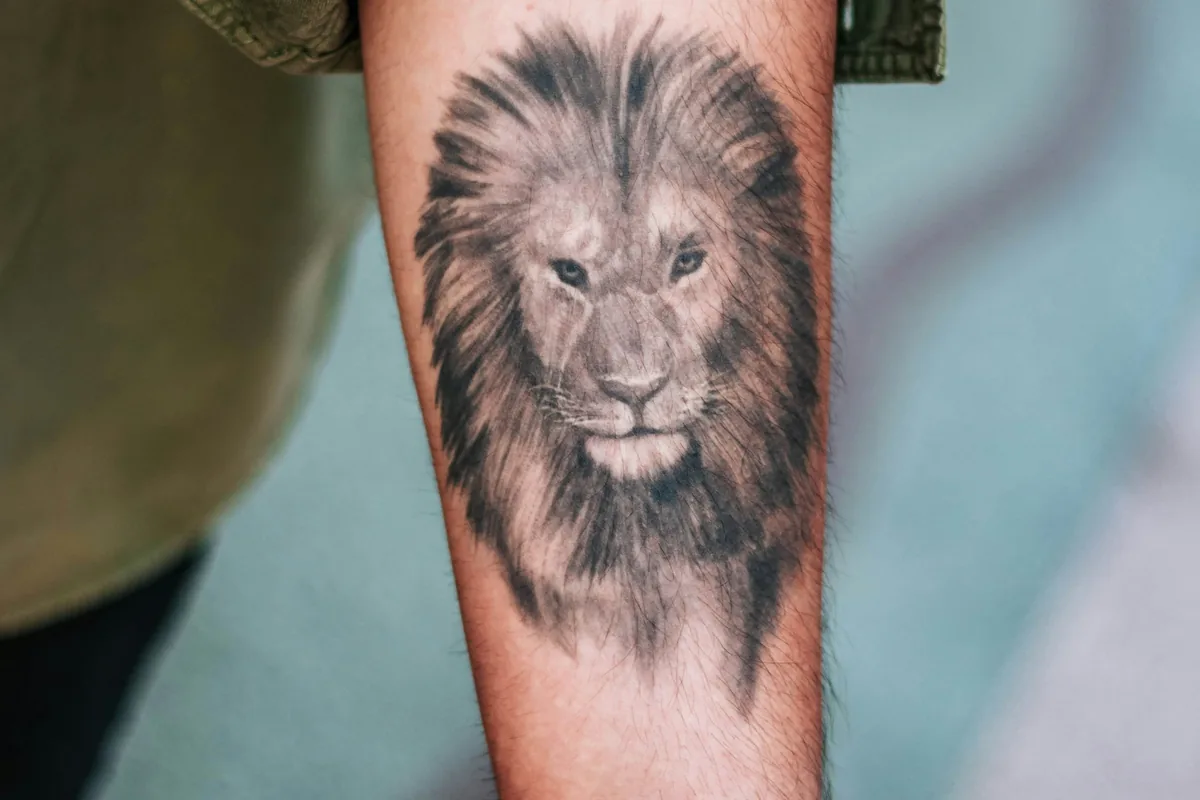
Realism aims to look like a photograph on skin. Artists build depth with smooth gradients rather than outlines. Black and grey realism uses diluted black ink for soft shading, while colour realism layers many tones. Common subjects include portraits, animals such as lions and tigers, religious figures and memorial pieces. Micro-realism squeezes the same approach into a palm-sized or smaller design. Of all tattoo styles, realism demands the most technical skill.
How it ages: well-done black and grey realism ages gracefully, because strong contrast between dark and light areas keeps the image readable. However, very soft, low-contrast shading can turn muddy. Colour realism needs regular sun protection to keep the bright tones from dulling. Micro-realism is the riskiest version, since fine detail at small scale blurs first.
Price and session length: realism is slow work. As a result, large pieces need several long sessions, and a full realism project at one PJ studio started from about RM8,000–RM10,000 in 2023. Check our tattoo price guide for current ranges and confirm with your artist. Placement: realism needs room, so forearms, calves, thighs and backs work best.
Where to find it: Raice Wong at Inktime Studio in KL stands out for colour realism. Pit Fun at Pitt's Tattoo in Penang does large black and grey work, while Kelly V at Mao Tattoo Studio in Bandar Sunway does portraits.
Traditional
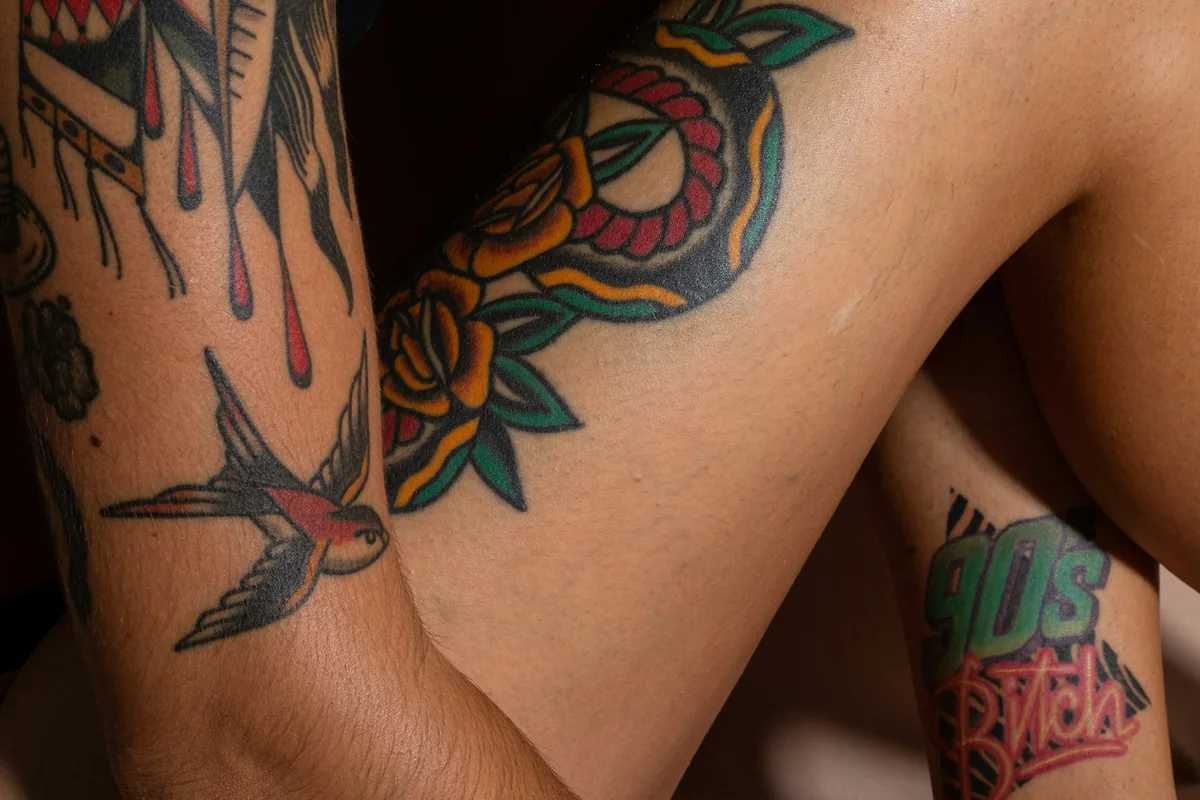
Traditional, also known as old school or American traditional, uses bold black outlines, solid fills and a small palette of red, green, yellow and black. Classic images include swallows, roses, daggers, panthers, ships and pin-up girls. The style took shape among sailors and in port towns in the early 20th century. Artists such as Sailor Jerry in Honolulu helped define its look. Many shops still keep walls of painted flash, so you can often pick a design on the day. Among tattoo styles, it is also one of the easiest to book at short notice.
How it ages: very well. In fact, the old saying "bold will hold" comes from this style. Thick lines and solid colour stay readable even after decades of sun. That makes traditional one of the best tattoo styles for Malaysia's climate and for busy placements such as forearms, hands and calves.
Price and where to find it: flash pieces usually cost less than custom work, because the design already exists. Julian Oh at Wayang Kulit Tatu in Subang Jaya paints his own flash and often adds wayang kulit puppet characters. Pclaink at Gimmick Tattoo in KL also does a softer, pastel take on old school, and Bowie Heng focuses on colour-heavy American traditional. See the Selangor tattoo shops guide for more studios.
Neo-traditional
Neo-traditional keeps the bold outlines of traditional work but adds more detail, varied line weight and a much wider colour palette. Designs often feature animal portraits, ornate frames, flowers and jewels, with an illustrated, almost Art Nouveau feel. The style grew from the 1980s onwards as artists pushed traditional imagery further, and it now sits among the most popular tattoo styles for colour lovers.
How it ages: generally well, since the outline still does the heavy lifting. However, the soft colour blends between those lines may fade sooner than solid fills. A good artist plans for this by keeping key areas dark. Placement: mid-sized areas such as the outer arm, thigh and chest give the detail room to breathe.
Price and where to find it: because of the extra detail and colour, neo-traditional often takes longer than a flash piece of the same size, so expect a higher quote. Chen at Piangpiang Studio in Cheras does playful neo-traditional and Japanese colour work. The Tattoo Parlor Malaysia in Kelana Jaya also lists neo-traditional among its styles. Browse our Kuala Lumpur tattoo shops guide for others.
Japanese
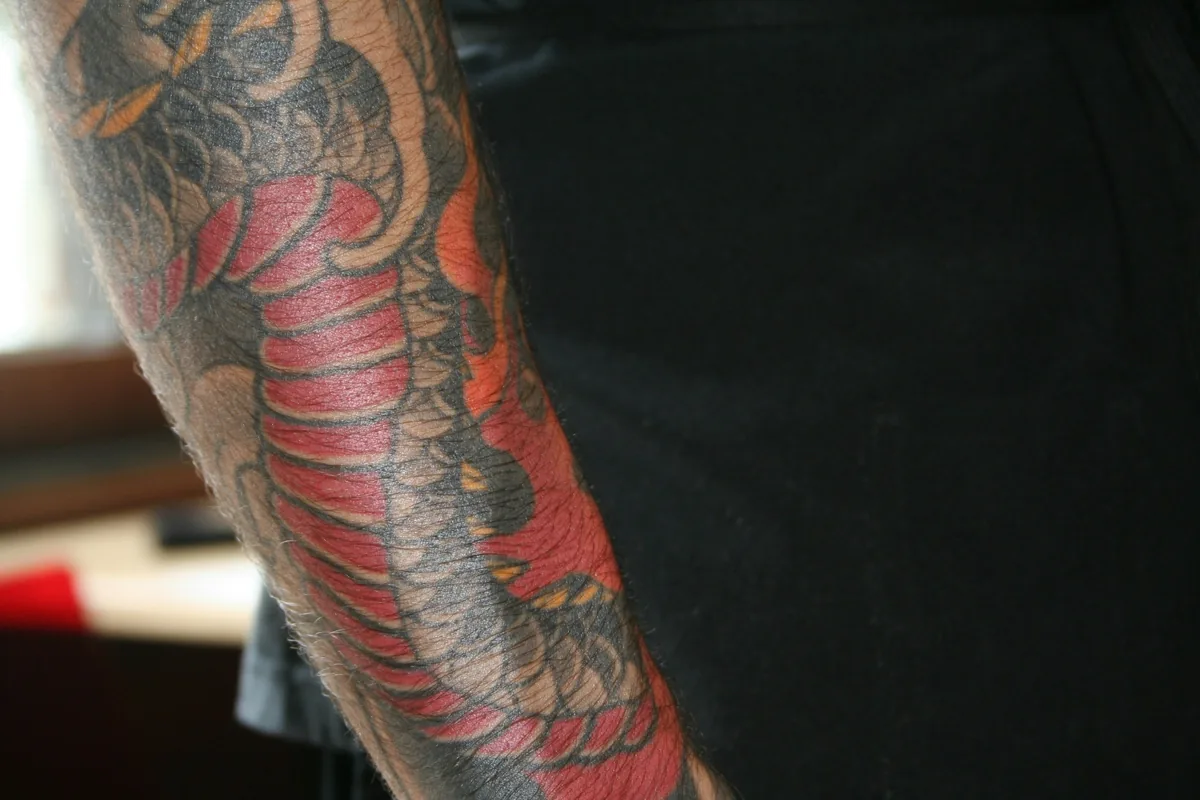
A Japanese tattoo, or irezumi, is a large-scale piece built around a few powerful images: dragons, koi, tigers, phoenixes, snakes, peonies, cherry blossoms and figures from folklore. Waves, clouds and wind bars tie the main images together and shape the piece to the body. A full traditional work can cover the arms, back, chest and thighs as one design.
Irezumi history and the yakuza link
Origins and history: decorative tattooing flourished in Japan during the Edo period (1603–1867). According to historians, woodblock prints of heroes from the Chinese novel Suikoden helped spark demand, and some print artists moved into tattooing. Then, in the early Meiji era, the government outlawed tattooing as Japan opened to the West. Tattooing became legal again in 1948, under the post-war occupation. You can read more in this overview of irezumi history.
The yakuza link: during the long period of prohibition, irezumi became tied to outsiders and to organised crime, and the image of the tattooed yakuza stuck. Today, many people in Japan who wear irezumi have no link to crime at all. Even so, some onsen, gyms and pools in Japan still turn away tattooed guests, so check the rules before a trip. In Malaysia, the style carries no such baggage and remains one of the most popular choices for sleeves.
How it ages: very well. Bold outlines, solid black backgrounds and strong colour make Japanese work one of the longest-lasting styles. Traditional hand-tool work, known as tebori, still exists, although most artists today use machines.
Price and where to find it: a Japanese sleeve or back piece takes many sessions, sometimes over a year or more. One PJ studio quoted Japanese or tribal large work from about RM6,000–RM6,500 in 2023, so see the sleeve tattoo price guide and confirm before booking. Yang Lee Tattoo in SS2, PJ is well known for oriental work, while Shane Leong of DiaoShane Tattoo in Selangor does traditional irezumi sleeves.
Blackwork
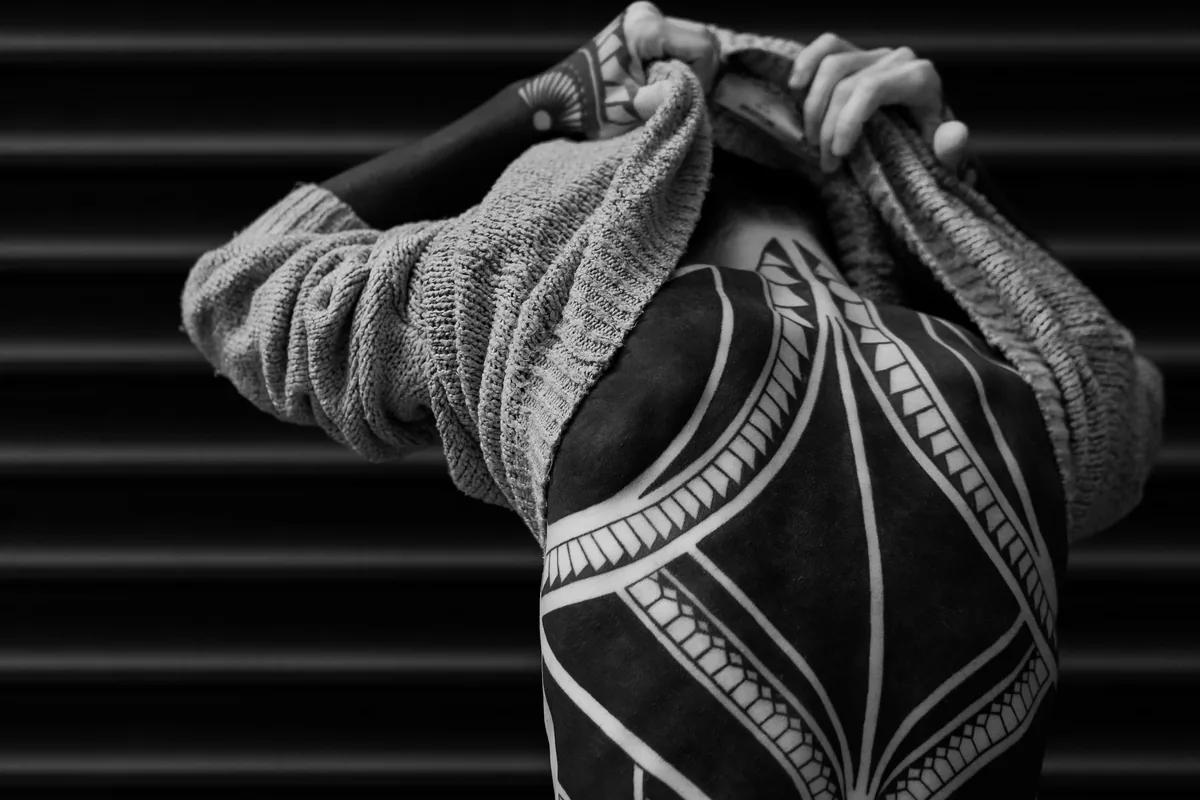
A blackwork tattoo uses only black ink, often in large solid areas. The term covers several looks: heavy blackout sleeves, ornamental patterns inspired by lace and textiles, illustrative black line drawings and dotwork, where the artist builds shading from thousands of tiny dots. Blackwork draws on old tattoo traditions from around the world, as well as on engraving and print-making. It is one of the most flexible tattoo styles, from a tiny symbol to a full bodysuit.
How it ages: solid black is the most durable ink in tattooing, so heavy blackwork stays strong for decades. Dotwork softens a little as dots spread, which is part of its charm. Blackwork also suits darker skin tones well, since black ink shows clearly where pale colours may not. In addition, it is one of the most effective options for tattoo cover-ups.
Healing and placement: large solid areas take a little longer to heal and can feel tender for a few days. Backs, full sleeves and legs suit big blackwork, while dotwork works at almost any size. Where to find it: Con Ele in KL does blackwork and stippled pet portraits, and Bloody Ink Tattoo in Sungei Wang Plaza has a long record for dotwork and geometric pieces.
Watercolour
Watercolour tattoos imitate paint on paper, with soft washes, splashes, drips and colour that bleeds past the edges. Many designs mix a simple black sketch with loose colour behind it. The style took off in the early 2010s and suits flowers, birds, animals and abstract shapes. Few tattoo styles look as painterly when fresh.
How it ages: this is the style most likely to fade. Soft, diluted colour without a dark outline has little structure to hold it together. So, over time, edges blur and pale tones fade, especially on skin that sees a lot of sun. For a watercolour tattoo that lasts, ask the artist to include black linework or a darker base, and plan on a touch-up after a few years. Our tattoo touch-up guide explains what that usually costs.
Where to find it: we found no Malaysia-based watercolour specialist with press coverage. The closest is Raice Wong at Inktime Studio in KL, whose colour work includes soft watercolour-style pieces. Otherwise, ask any colour artist for healed watercolour examples at least two years old.
Geometric
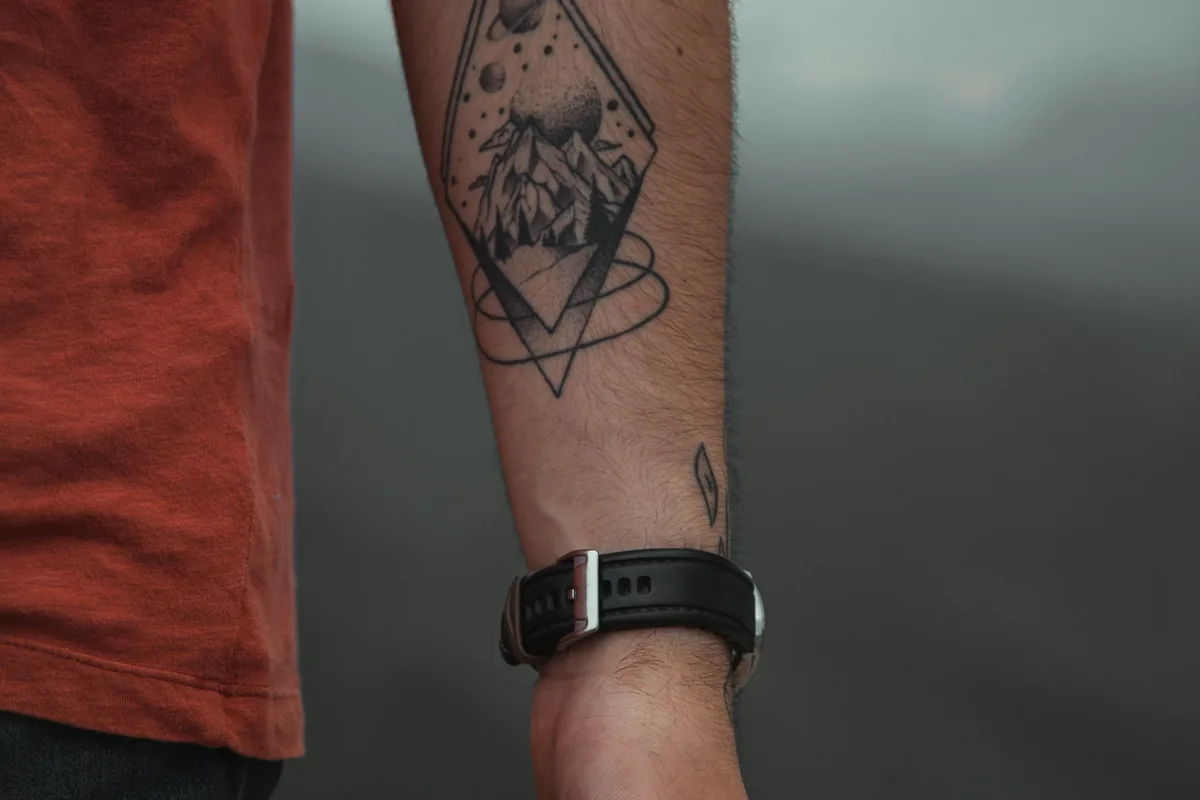
A geometric tattoo builds a design from lines, shapes and patterns: triangles, hexagons, sacred geometry, mandalas and optical patterns. Some pieces are purely abstract, while others combine geometry with animals or flowers. Precision is everything. A circle that is slightly off or a line that wobbles shows straight away, so this is one of the least forgiving tattoo styles.
How it ages: bold geometric work with solid black ages well. Very fine, closely spaced lines, however, can merge over time, so ask your artist to leave enough space between them. Placement: flat, stable areas such as the forearm, upper arm, calf and back suit symmetry best, because curved or stretchy skin can distort straight lines.
Where to find it: Bloody Ink Tattoo in Bukit Bintang has specialised in dotwork and geometric for more than a decade. For more studios by city, see our tattoo shops in Malaysia hub.
Tribal and Borneo traditions
"Tribal" means two very different things, and it helps to keep them apart. The first is the generic tribal look that peaked in the 1990s: bold, flowing black shapes, often loosely inspired by Polynesian and Bornean art but without their meaning. The second is a living cultural tradition, such as the tattooing of the Iban and Orang Ulu peoples of Sarawak. That is one of the oldest continuous tattoo traditions in the world.
Iban tattooing and hand-tapping
Iban tattooing: traditional Iban motifs record a life. Young men collected tattoos on bejalai, a journey away from the longhouse to seek knowledge and fortune. The bunga terung, or brinjal flower, on the shoulders is the best-known motif and marks the passage into adulthood. Other motifs, such as the tegulun on the hand, once marked status that people had to earn. For that reason, people outside the community should not request them. Among the Kayan and related groups, women tattooed women, mother to daughter. Sarawak Tourism has a good introduction to these stories.
Hand-tapping: traditional artists tap ink into the skin with a needle stick and a striking stick, rather than a machine. Today they use sterile needles and modern ink. Some clients say hand-tapping feels gentler than a machine, though experiences differ. Our Borneo hand-tap tattoo guide covers the process and etiquette, and our Malaysian tattoo designs page explains the motifs.
How it ages: both Iban work and generic tribal rely on solid black, so they age very well. Where to find it: for authentic work, go to an Iban or Dayak artist. In Kuching, Ernesto Kalum and Boi Skrang are leading names. In the Klang Valley, Eddie David at Borneo Ink and Simon David at Electric Dreams in PJ both offer hand-tap work. Let the artist advise on which motif suits you, and accept it if they say no.
Lettering
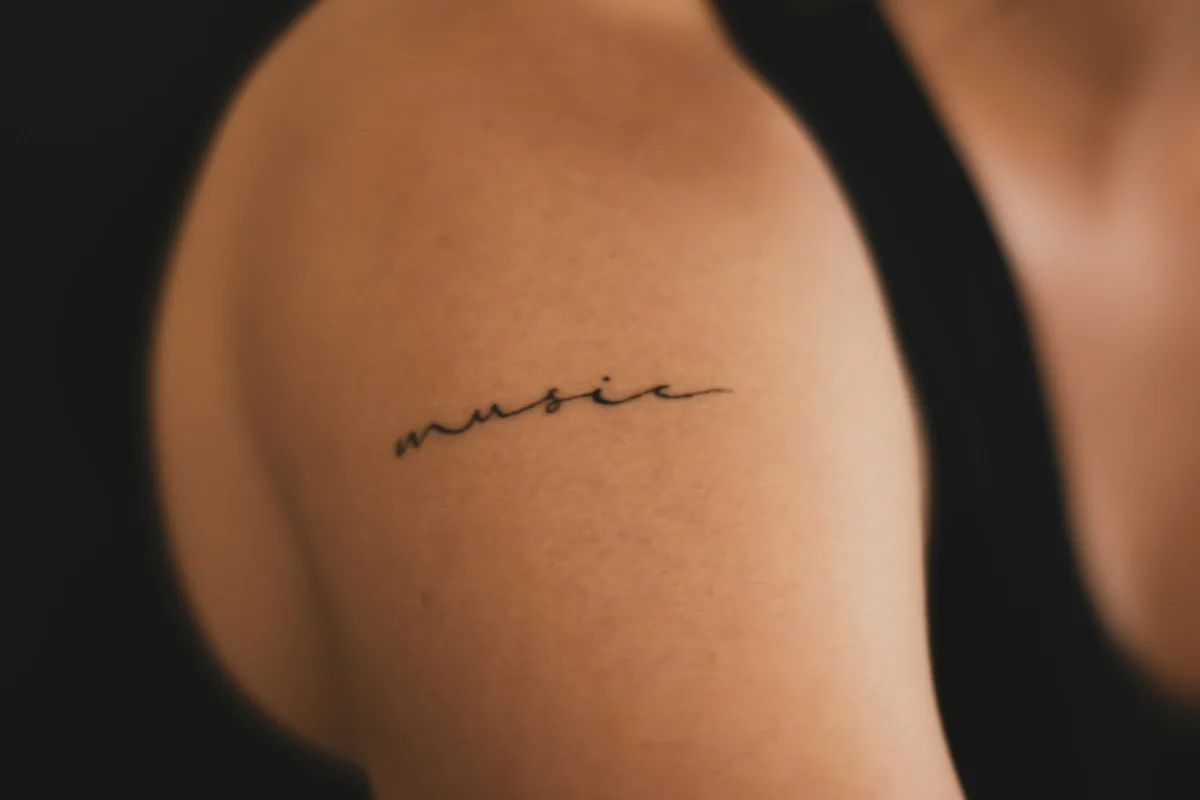
Lettering covers any tattoo built from words: names, dates, quotes, song lyrics and mantras. Styles range from fine line handwriting and typewriter fonts to flowing script, gothic blackletter and Chicano lettering, which grew from the Mexican-American communities of Los Angeles. Custom lettering, drawn by hand rather than typed, usually looks better than a stock font. Lettering also pairs easily with other tattoo styles, such as a fine line flower or a traditional banner.
How it ages: letters age like any other line, so size and spacing decide how long they stay readable. Small, tight script with closed loops, such as "e", "a" and "o", tends to fill in first. As a rule, the bigger and more open the lettering, the longer it lasts. Always check spelling twice, especially for words in another language.
Price and where to find it: short words often fall within the shop minimum, while full quotes cost more. We found no press-backed lettering specialist in Malaysia. Even so, 33 Tattoo in Skudai, Johor Bahru, offers dedicated lettering and Chicano services. For anyone else, ask to see healed script at least a year old. Our guide to choosing a tattoo artist lists what to check.
Trend note: cyber sigilism
Cyber sigilism is a newer look that spread through social media in the early 2020s. It uses sharp, spiky black lines that flow along the body, mixing the shapes of old sigils with a digital, futuristic edge. Pieces often run down the spine, along the arms or across the collarbones. It works best with confident, medium-weight lines, because very thin, spiky ends can blur over time. As with any trend, think about whether you will still like it in ten years.
Tattoo styles compared
This table sums up how each style behaves. Session lengths are typical for a palm-sized to medium piece, and large work takes several sessions.
| Style | Line weight | Ageing | Typical session | Colour |
|---|---|---|---|---|
| Fine line | Very thin | Can soften or blur; needs sun care | Under 1–2 hours | Mostly black |
| Realism | Few or no outlines; soft shading | Good if high contrast | 3–6 hours; often several sessions | Black and grey or full colour |
| Traditional | Bold | Excellent | 1–3 hours | Limited palette |
| Neo-traditional | Bold to medium, varied | Very good | 2–5 hours | Wide palette |
| Japanese | Bold | Excellent | Many sessions for sleeves and backs | Colour or black and grey |
| Blackwork | Bold, solid fills or dots | Excellent | 2–6 hours | Black only |
| Watercolour | Soft, often no outline | Fades fastest | 2–4 hours | Full colour |
| Geometric | Fine to bold, precise | Good if lines well spaced | 2–5 hours | Mostly black |
| Tribal / Borneo | Bold, solid black | Excellent | 1–4 hours; hand-tap can take longer | Black |
| Lettering | Thin to bold | Depends on size and spacing | Under 1–2 hours | Mostly black |
How to pick the right tattoo style for you
Start with what you want the tattoo to mean, then think about how it will live on your skin. If you spend a lot of time outdoors, bold styles such as traditional, blackwork and Japanese will last longest. For a small, subtle first tattoo, fine line works, but keep the design simple and not too tiny. In addition, collect photos of healed work you like, then look for an artist whose whole portfolio matches. Our tattoo ideas hub and first tattoo guide can help you narrow it down.
Finally, plan your aftercare. Malaysian heat and humidity mean more sweat, so keep a new tattoo clean and out of the sun until it heals. Then use sunscreen on it for life. Cleveland Clinic also notes that UV fades tattoo ink. See our full tattoo aftercare guide and our article on healing a tattoo in humidity.
Frequently asked questions
What are the main tattoo styles?
The ten main tattoo styles are listed at the top of this page. Many tattoos also mix two or more, such as fine line with lettering.
Which tattoo style lasts the longest?
Styles with bold lines and solid black last longest. Traditional, blackwork, Japanese and tribal all hold up well for decades, even in strong sun. Watercolour and very fine line work tend to fade or blur sooner.
What does fine line mean in tattooing?
Fine line means the artist uses very thin needle groupings to make delicate, crisp lines. It suits small florals, script and minimal designs. It looks elegant, but the thin lines need a skilled hand and good sun care to stay sharp.
Is fine line tattooing harder?
Yes, in many ways. There is little room for error, because a shaky or overworked line shows straight away and can blow out under the skin. That is why it pays to choose an artist with a strong healed fine line portfolio.
Do watercolour tattoos last?
They last, but they fade faster than most styles, especially without black linework. Ask for a darker outline or base, protect the area from sun and expect a touch-up after a few years.
What is an Iban tattoo?
An Iban tattoo is a traditional design from the Iban people of Sarawak, often hand-tapped. Motifs such as the bunga terung carry meaning about life stages and journeys. Some motifs once marked earned status, so it is best to choose one with an Iban artist's guidance.
Is a Japanese tattoo linked to the yakuza?
In Japan, irezumi gained a yakuza image during decades of prohibition, and some baths and gyms there still restrict tattoos. In Malaysia it is simply a popular art style.